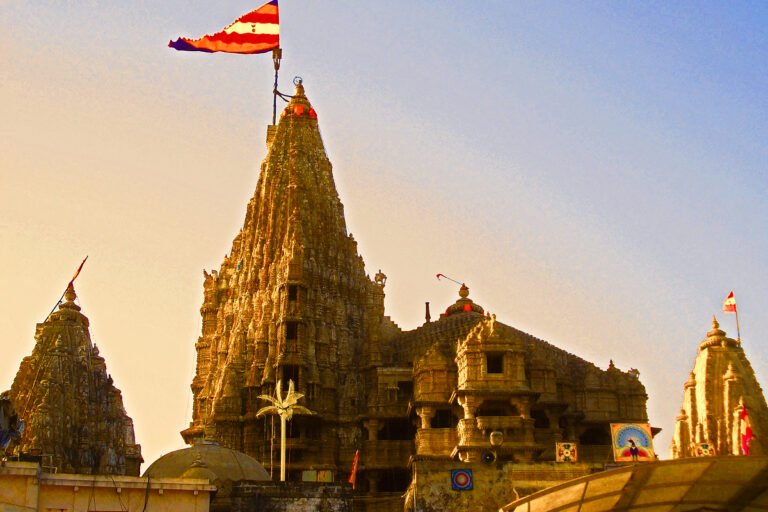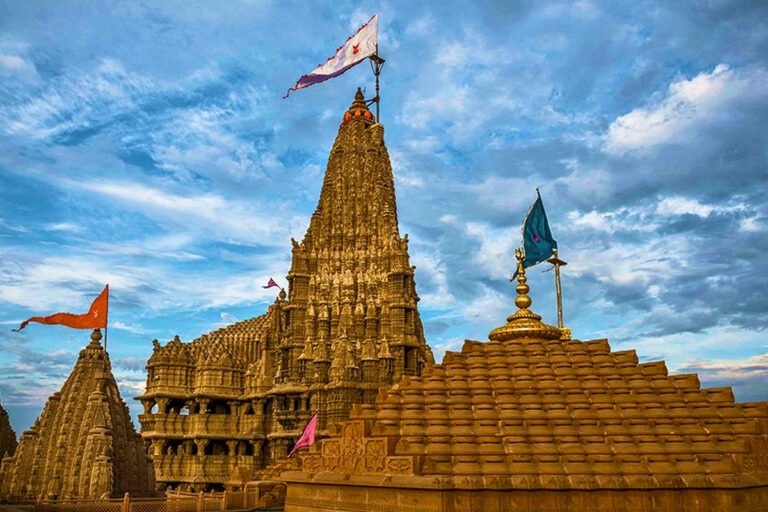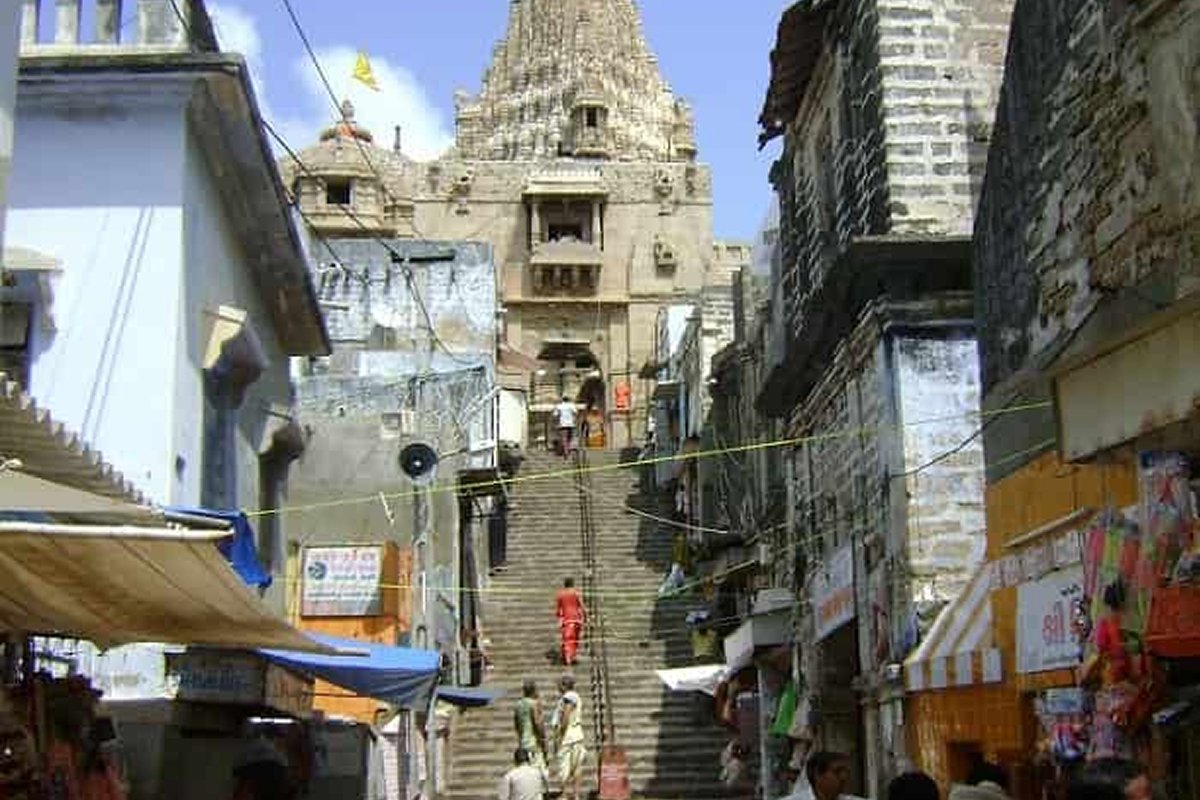
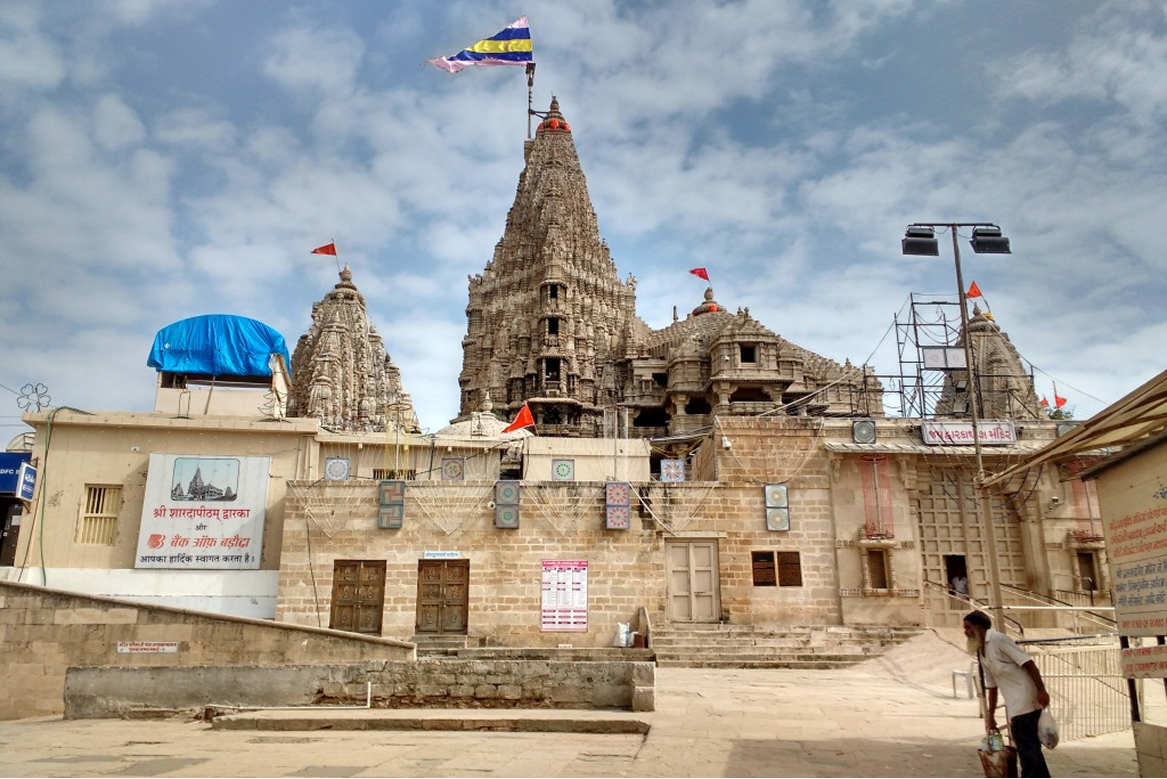
Most devotees visiting Dwarkadhish Temple unknowingly enter from the Moksha Dwar, the front gate — simply because it’s easier and closer to the main road. But ask any local, and they’ll tell you the truth: the real Dwarka darshan begins from the Swarg Dwar.
Hidden behind the temple, facing the sacred Gomti River, this gate represents the true spiritual path — the ascent from sin to salvation. With its 56 symbolic steps, peaceful surroundings, and deep roots in Puranic tradition, the Swarg Dwar isn’t just a doorway — it’s a pilgrimage in itself.
What Makes Swarg Dwar So Special
“Swarg Dwar” literally means “Gateway to Heaven.”
The 56 steps leading up from Gomti Ghat aren’t just architectural — they’re symbolic. Each step represents shedding one layer of ego or impurity before meeting Lord Dwarkadhish.
According to the belief, climbing these 56 steps cleanses 56 types of sins, preparing you for a pure darshan. Unlike the front Moksha Dwar, Swarg Dwar stays calm, kissed by the sea breeze and echoing with temple bells — a peaceful start to a divine experience.
Tip: Buy prasad from inside of temple
The Correct Darshan Route — What Locals Follow
Locals in Dwarka follow a time-tested sequence that’s both spiritually meaningful and practically safe:
- Deposit your belongings — phones, purses, and shoes — at the temple locker area near Moksha Dwar (the front side). The facilities are clean and secure.
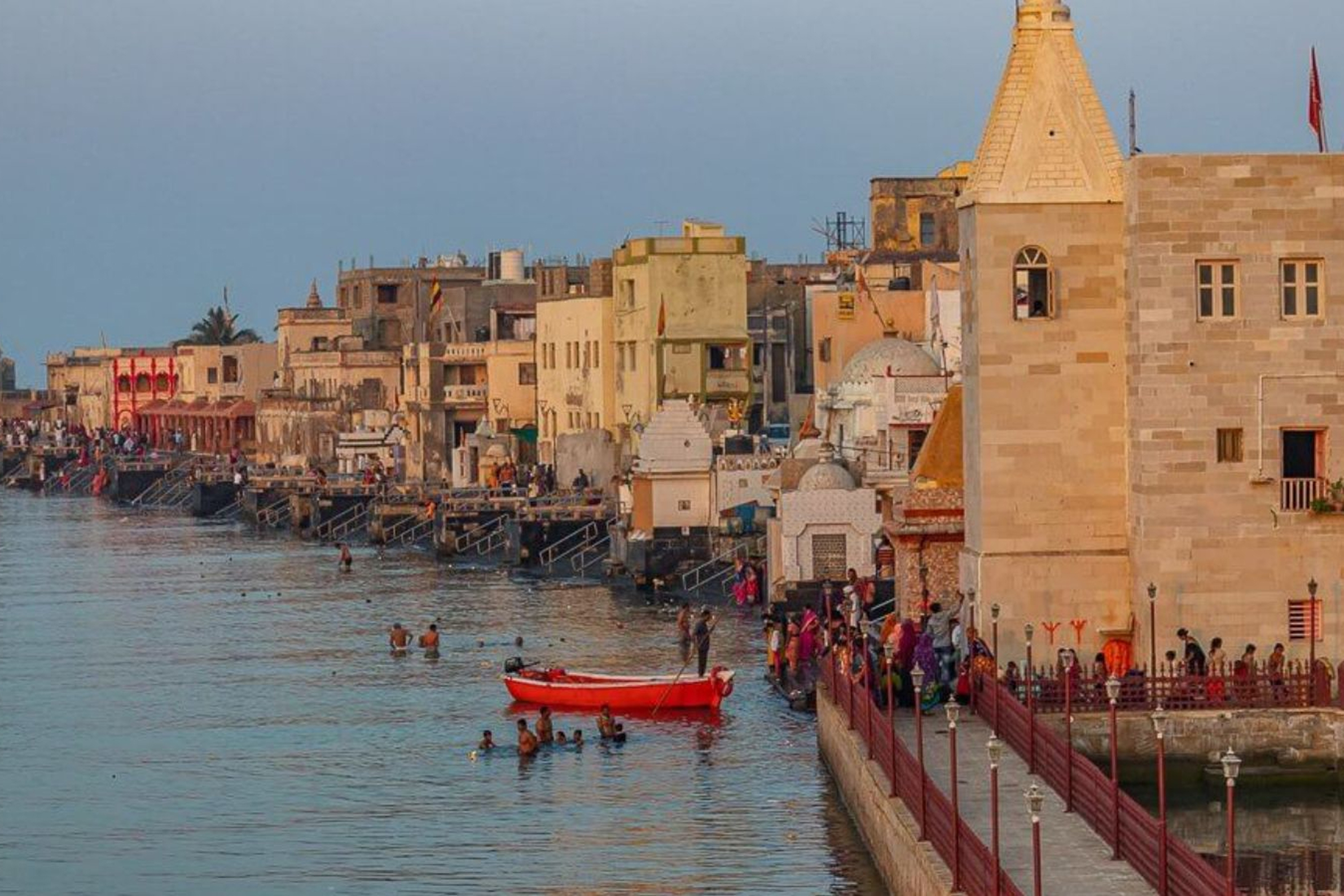
- From there, walk down to the Gomti Ghat behind the temple. (100 m)
- Take a holy dip in the Gomti River — as mentioned in the Skand Puran, this purifies the soul before darshan.
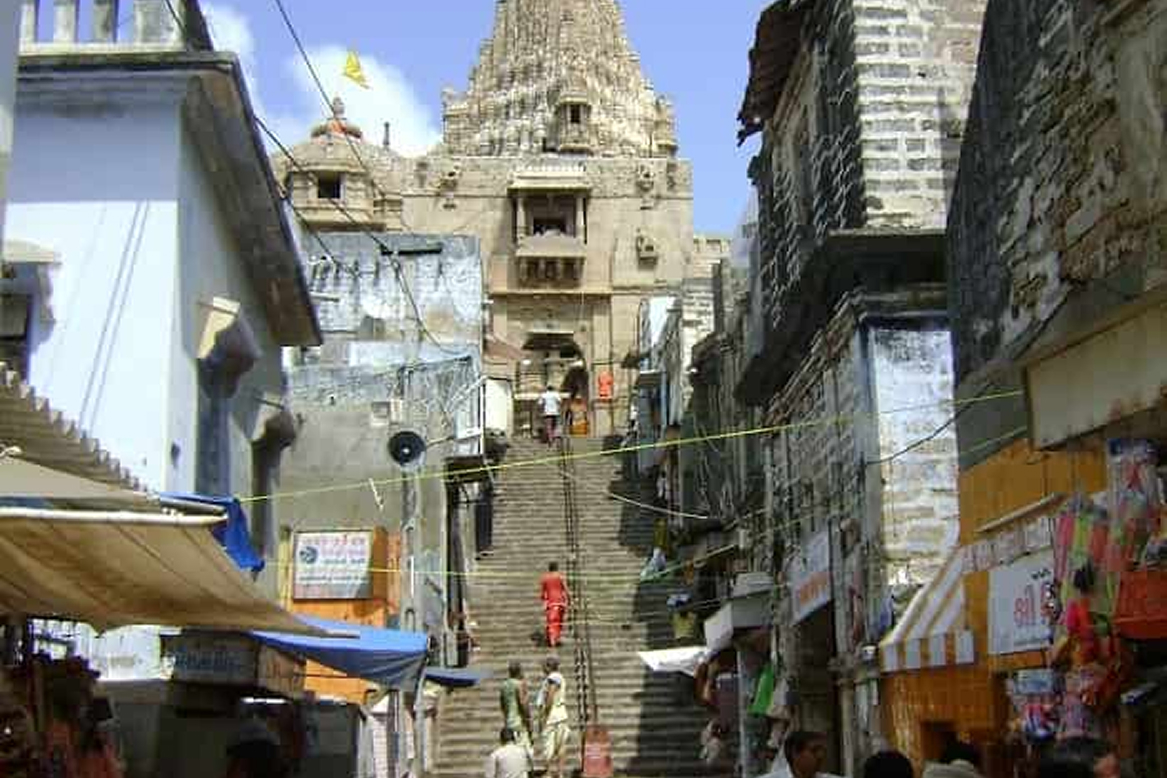
- Climb the 56 steps from Gomti Ghat to reach the Swarg Dwar.
- Enter the temple through Swarg Dwar for darshan of Lord Dwarkadhish.
- Exit through Moksha Dwar, collect your belongings, and complete your sacred circuit.
This is the route locals have followed for generations — spiritually authentic, safe, and smooth. It avoids the risk of losing items at the ghat while bathing, ensures comfort, and keeps the whole experience serene.
Crowd, Accessibility & Local Insight
Let’s be practical — the Moksha Dwar (front gate) is the main public entrance because it’s close to the market and easily accessible for elders or differently-abled devotees. It’s also where you’ll find the lockers and footwear counters.
However, the Swarg Dwar (back gate) remains peaceful even during rush hours. Locals love it for:
The quiet environment and fewer queues.
The Gomti Ghat backdrop, perfect for reflection and prayer.
Its spiritual correctness, rooted in ancient scriptures.
So while Moksha Dwar offers convenience, Swarg Dwar offers clarity. Start your journey there — your heart will feel the difference.
Local Tips for First-Time Visitors
If this is your first visit to Dwarka, these practical tips can make your darshan smooth and memorable:
Best time for darshan: Around 9:00 PM — the temple glows under the lights, crowds thin out, and the energy feels deeply peaceful.
Use the lockers near Moksha Dwar for valuables before heading to Gomti Ghat. It’s the safest way to enjoy snan and darshan stress-free.
Begin from Swarg Dwar: After Gomti snan, climb the 56 steps and enter from the back gate.
Exit from Moksha Dwar: Collect your belongings after darshan. This completes the spiritual and practical loop.
Pause on the final step: Take a breath, fold your hands, and let the moment sink in — you’re entering Krishna’s city, not just a temple.
Bonus Tip: The Gomti Snan Tradition
The Skand Puran says:
“Gomati-snaneena shuddhyati papebhyah” —
A dip in Gomti cleanses one of all sins.
Why It Truly Matters
Choosing Swarg Dwar isn’t just about taking a different route — it’s about taking the right one. You enter through the Gateway to Heaven and exit through the Gateway to Liberation — the perfect representation of a devotee’s journey from devotion to deliverance.
It’s how saints, locals, and true seekers have done it for centuries. Follow their path, not the crowd’s.
Take a dip in Gomti. Climb the 56 steps. Enter through Swarg Dwar. That’s not just darshan — that’s Dwarka, experienced the way it was meant to be.